

What Is a DAS System?
Cellular Distributed Antenna Systems Explained. Learn what a Cellular DAS is and how it improves cellular coverage in hospitals, apartments, campuses and more.
What is a Cellular DAS System?
A cellular Distributed Antenna System (DAS) is an in-building or in-area solution designed to significantly improve cellular signal coverage and capacity where traditional outdoor cell towers struggle to reach.
In simple terms, a DAS acts like a network of small, localized cell sites within a structure or geographic area, ensuring your phone has a strong, consistent signal everywhere.
Why is a DAS Systems Needed?
Poor cellular reception inside buildings is a common problem due to obstacles like:
Construction Materials: Concrete, steel, and low-emissivity (Low-E) glass can block or severely weaken radio frequency (RF) signals.
Building Size/Layout: Large venues (stadiums, airports, malls) and high-rise buildings have immense surface area and internal complexity that a single outdoor signal cannot penetrate effectively.
Capacity: In high-density areas (like a crowded stadium), a single cell tower can be overwhelmed. A DAS increases network capacity by distributing the user load across multiple antennas.
Example of Cellular DAS in Use
A concrete example of what a DAS can do is found in a large hotel conference room during a packed business summit:
Without a DAS, the concentrated crowd of hundreds of mobile devices overwhelms the limited signal bleeding from the outside cell tower, causing crucial calls to drop and mobile data to slow to a crawl. Even having fully dead zones that could greatly impact a work conference.
With a DAS, the load is distributed across multiple hidden antennas within the ceiling, ensuring every attendee can make a clear cellular call and instantly upload large presentation files without a network failure.
How DAS Improves Tenant, Guest and Staff Satisfaction (The "Invisible Utility")
In modern commercial real estate, whether it’s an office tower, a luxury apartment complex, or a hotel, cellular connectivity is considered the fourth utility. It is just as essential as water, heat, and electricity. A DAS system quietly and significantly enhances satisfaction in hotels, office buildings, apartments, hospitals, workspaces and more.
Emergency & Safety: Ensures reliable E911 calls and first responder communication, even in basements or stairwells, providing peace of mind.
Productivity: Eliminates dropped calls and ensures high-speed data access for mobile apps, VPNs, and video conferencing, allowing for seamless work/life integration.
Convenience: Enables the use of mobile-first building features like digital room keys, app-based concierge services, and smart-home controls, resulting in a modern, frictionless experience.
Density & Capacity: Distributes the cellular load across many antennas, preventing slowdowns when large crowds gather, guaranteeing fast data speeds even during peak usage times.
The Remote Worker Era
With the rise of the digital nomads & those working remotely, the requirements for how the hospitality industry is rated has changed. For this growing, high-value demographic, connectivity is not a luxury; it is the primary tool of their job.
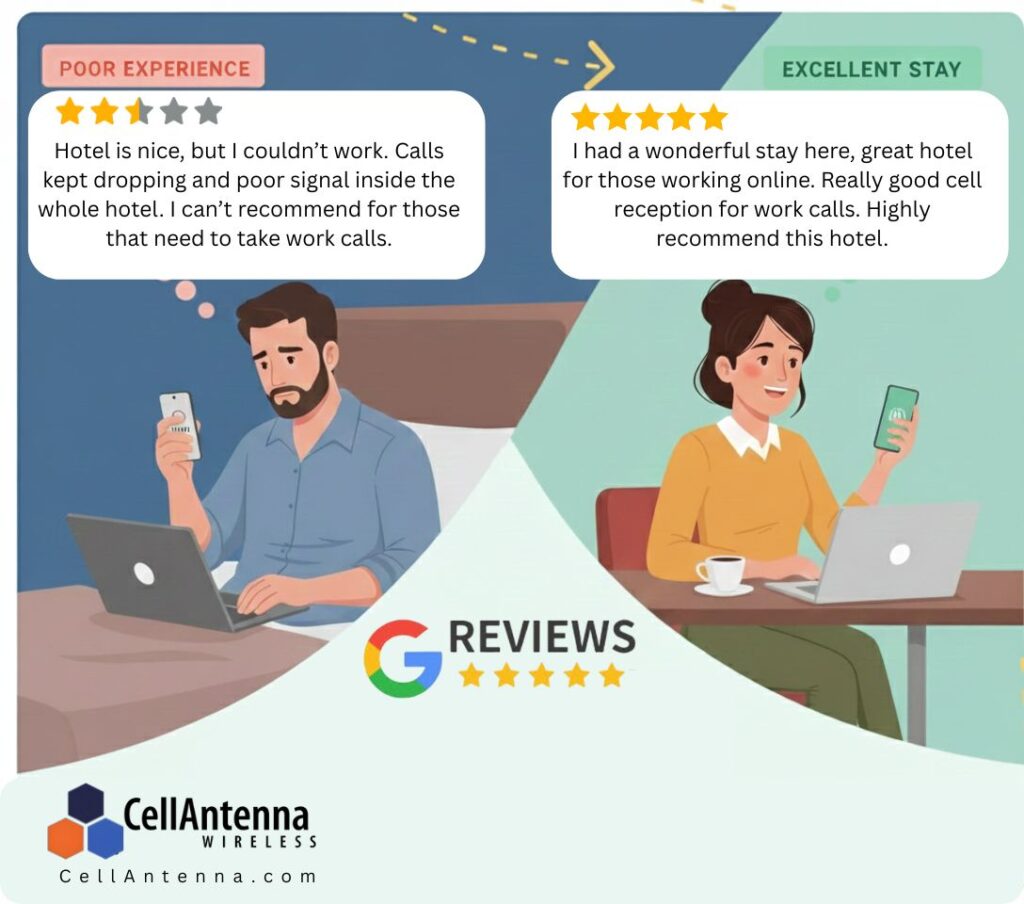
Connectivity as a Star Rating Factor: Digital nomads and remote workers rely heavily on reviews from other travelers when choosing accommodation. The quality of Internet speed, stability, and reliability (both Wi-Fi and strong cellular backup/hotspot ability) has become one of the most weighted factors in their reviews, often surpassing traditional factors like pool size or on-site dining.
The “Double Whammy”: For a remote worker, a hotel room with poor Wi-Fi is a problem, but a hotel room with no cellular signal is a crisis. When the Wi-Fi fails or is too congested, they must rely on their mobile hotspot for critical work calls (Zoom, Teams, etc.). A building without a DAS often has dead zones in guest rooms due to internal building structure, forcing the guest to inconveniently work from the lobby or even check out early.
Visible Impact on Bookings: Online booking platforms and niche nomad-focused review sites now feature dedicated ratings for Wi-Fi speed and connectivity. A poor rating in this area can significantly depress occupancy rates for the business traveler segment.
Planing A Cellular DAS System
Integrating Cellular DAS into your building plans during pre-construction ensures the system is designed into the infrastructure rather than added as an afterthought. Running cable, reserving telecom room space, and coordinating with MEP (Mechanical, Electrical, Plumbing) drawings during construction saves significant costs compared to retrofitting.
Key Advantages of Pre-Construction Cellular DAS Planning:
Lower Costs: Installing cabling and pathways while walls are open avoids expensive demolition later.
Code Compliance: ERRCS requirements can be addressed upfront, helping you pass fire marshal inspections and avoid costly delays.
Future-Proofing: With wireless demand only increasing, early design ensures your building can support 4G, 5G, and beyond.
Smooth Coordination: Architects, IT leaders, and wireless providers can align on space, power, and cooling needs for DAS equipment rooms.
Choosing a Cellular DAS Provider During Pre-Construction
Working with a Cellular DAS provider early in the project ensures the system is designed correctly the first time. An experienced partner can:
Perform a wireless needs assessment before final plans are locked in.
Provide design drawings that align with your architect and engineering teams.
Coordinate with carriers (AT&T, Verizon, T-Mobile, etc.) to ensure support across networks.
Identify ERRCS requirements in your jurisdiction to avoid compliance issues.
Recommend scalable designs so the system supports future technology upgrades without major reconstruction.
Cellular DAS for Office Buildings
A DAS ensures reliable, high-speed cellular data and voice connectivity on every floor, eliminating dropped calls and enabling seamless mobile productivity for tenants and employees. This consistent coverage across the building, including basements and common areas, makes the property more competitive and desirable to modern corporate tenants.
Cellular DAS for Hospitals & Healthcare
In complex hospital environments, a DAS is critical for maintaining robust connectivity for doctors and staff to use mobile medical applications and ensure instantaneous communication during emergencies. Furthermore, implementing a Public Safety DAS component guarantees first responders can communicate reliably inside the building during a crisis, meeting crucial safety regulations.
Cellular DAS for Hotels
By eliminating dead zones in guest rooms and conference spaces, a DAS directly boosts guest satisfaction and improves high-weighted reviews, particularly from business and digital nomad travelers who rely on strong mobile signals. This consistent, multi-carrier coverage also supports mobile key systems and app-based concierge services, enhancing the overall guest experience.
Cellular DAS for Apartments & Condos
A DAS provides residents with reliable cellular service for both daily use and $\text{E}911$ access, transforming an essential utility into a key selling point for luxury living spaces. Ensuring strong signal in all units and amenity areas, including parking garages and fitness centers, increases perceived property value and resident retention rates.
Cellular DAS for Industrial Facilities
A DAS supports the critical connectivity needed for mobile inventory systems, data collection, and safety applications within large warehouses and manufacturing floors, where metal structures typically block signals. Consistent, reliable cellular service throughout the facility improves operational efficiency and ensures safety personnel maintain communication across vast or underground work zones.

We have extensive experience designing and installing ERRCS, Cellular DAS, and enterprise grade Wi-Fi systems for multi-family properties and apartment buildings across the United States. Our team understands the unique demands of residential communities, from minimizing disruption to tenants to coordinating with property management, building engineers, and security teams. With decades of combined field experience, we deliver high reliability wireless infrastructure that supports voice calls, streaming, work from home needs, smart home devices, and property management systems. Our solutions are trusted by property owners and management groups nationwide for their performance and regulatory compliance.
The Reputable Choice for Cellular DAS Deployment
Learn More About Our Cellular DAS Installation Solutions
Our solutions close coverage gaps, enhance communication, and support critical connectivity nationwide.
FAQ About Cellular Distributed Antenna Systems
What industries benefit most from a Cellular DAS Installation
We install DAS and perform inspections across all industries, including:
Healthcare – hospitals, clinics, emergency rooms
Hospitality – hotels, resorts, convention centers
Commercial – offices, retail, mixed-use buildings
Education – schools, universities, research facilities
Transportation – airports, train stations, tunnels
Public Safety – fire stations, government buildings, 911 centers
Industrial & Manufacturing – warehouses, factories, distribution centers
Sports & Entertainment – stadiums, arenas, casinos
What is a Distributed Antenna System (DAS)?
A Distributed Antenna System (DAS) is a network of antennas installed throughout a building or campus to improve cellular, Wi-Fi, and emergency communication signals. It eliminates dead zones and ensures seamless connectivity indoors, which is especially critical for hospitals, airports, stadiums, hotels, office towers, and manufacturing facilities.
Why do I need a DAS for my building?
Most modern buildings block wireless signals due to construction materials like concrete, steel, and low-emission glass. A DAS solves this by distributing strong, consistent coverage throughout the entire property, ensuring:
Uninterrupted communication for staff and customers
Reliable public safety connectivity for first responders
Better compliance with local and federal building codes
Improved guest and employee experience
How do I know if my building needs a DAS?
You likely need a DAS if:
You have dead zones where calls drop or data slows
Your building is large, multi-level, or heavily constructed
You’re in a location where signal struggles to penetrate indoors
Your local fire or building codes require public safety coverage testing
We offer comprehensive site surveys and signal inspections to identify gaps before recommending the best solution.
Are DAS systems required for public safety compliance?
In many areas, yes. NFPA, IFC, and local jurisdictions often require Emergency Responder Radio Coverage (ERRC) testing and remediation to ensure first responders have reliable signal inside your building. Our inspections identify gaps, and our DAS solutions bring you into full compliance.
How much does a DAS installation cost?
Costs vary depending on:
Size and complexity of your building
Number of carriers integrated (AT&T, Verizon, T-Mobile, etc.)
Level of coverage needed (cellular, Wi-Fi, public safety)
Existing cabling and infrastructure
We offer free consultations, customized quotes and even CapEx or OpEx Plans based on your specific needs.
What is a DAS inspection, and how often do I need one?
A DAS inspection, sometimes called a signal coverage assessment, tests your building’s cellular and emergency communication strength.
Initial inspection: Required before installation or upgrades
Annual inspections: Recommended to maintain compliance and ensure system health
Post-renovation testing: Necessary if structural changes could affect coverage
How do I get started?
The first step is a DAS site assessment. We’ll measure your existing coverage, identify compliance requirements, and create a custom plan for your property.
Contact us today to secure better, safer, and stronger connectivity.