
Public Safety & In-Building Wireless Solutions
Have a Project to Discuss?
From design and installation to inspection and compliance, we work with commercial properties to deliver reliable in-building wireless solutions.
Schedule a free consultation to review your project and next steps.
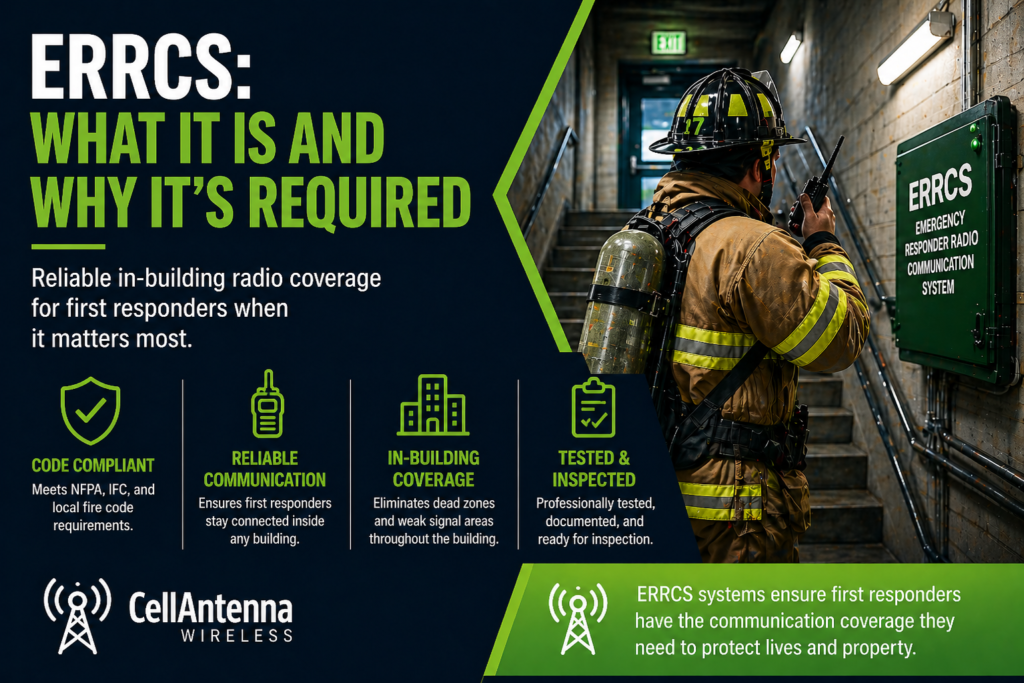
ERRCS (Public Safety DAS): What It Is and Why It’s Required
In today’s buildings, reliable communication isn’t just about convenience. It’s about safety. When first responders enter a structure during an emergency, they rely on uninterrupted radio communication to coordinate efforts, locate occupants, and operate effectively under pressure.
Unfortunately, many modern buildings block or weaken radio signals due to construction materials, building size, and layout. Concrete, steel, and energy-efficient glass can significantly reduce signal strength, creating dangerous communication gaps.
This is where ERRCS comes into play.
What Is an ERRCS System
An ERRCS (Emergency Responder Radio Communication System) is designed to ensure reliable in-building radio communication for first responders such as firefighters, police, and EMS.
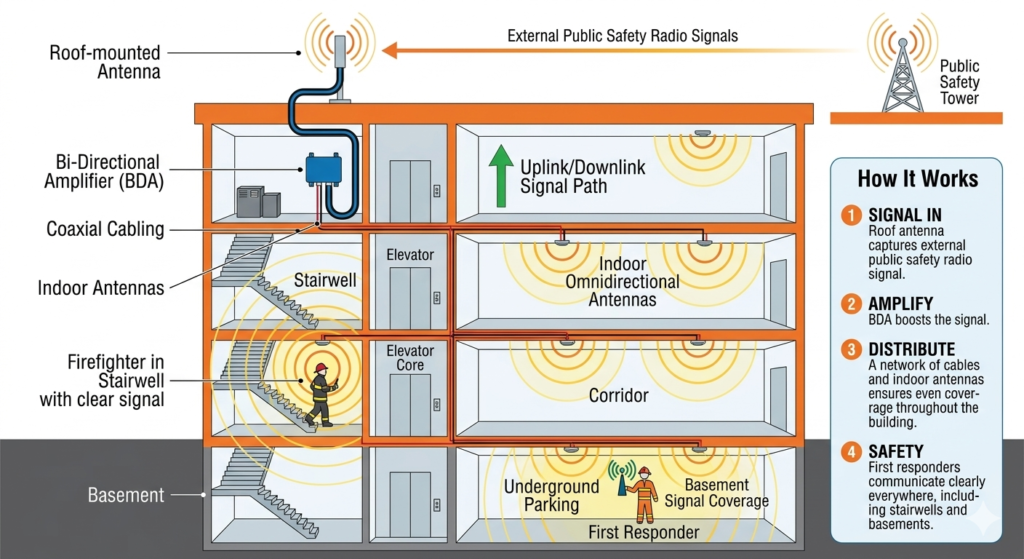
These systems are often implemented using a BDA (Bi-Directional Amplifier) or a distributed antenna system depending on the size and complexity of the building.
The goal is simple: provide consistent, code-compliant radio coverage throughout a structure so emergency personnel can communicate without interruption.
Why Buildings Block Radio Signals
Modern construction methods often interfere with radio signals. Materials such as reinforced concrete, steel framing, and low-emissivity glass are excellent for durability and energy efficiency, but they also block radio frequency signals.
Large buildings with multiple floors, underground areas, stairwells, and elevator shafts further contribute to poor signal penetration. These areas often become dead zones where radios fail to function reliably.
During an emergency, this lack of communication can delay response times and increase risk for both occupants and first responders.
Why ERRCS Systems Are Required
ERRCS systems are mandated by fire codes such as NFPA standards and enforced by local Authorities Having Jurisdiction (AHJs).
These codes require buildings to meet minimum signal strength levels for public safety radio systems. If a building does not meet these requirements, it must install a system to bring it into compliance before receiving approval or a Certificate of Occupancy.
This is why working with experienced providers for an ERRCS installation company is critical. A properly designed system ensures compliance from the start and helps avoid costly delays or failed inspections.
Florida Code Requirements for ERRCS Systems
In South Florida, ERRCS systems must comply with national standards such as NFPA as well as the Florida Fire Prevention Code (Chapter 633).
Local AHJs enforce these requirements to ensure reliable communication coverage for emergency responders. Each jurisdiction may have slightly different testing standards, coverage expectations, and approval processes.
Because of these variations, working with a provider familiar with South Florida regulations is essential to ensure your system meets all requirements and passes inspection.
BDA vs DAS: What’s the Difference
In most commercial buildings, an ERRCS system is implemented using a BDA (Bi-Directional Amplifier), which amplifies public safety radio signals throughout the structure.
For larger or more complex environments such as high-rise buildings, hospitals, or multi-building campuses, a fiber-based DAS (Distributed Antenna System) may be required. These systems distribute signal over longer distances and provide more consistent coverage where traditional BDA systems are not sufficient.
Choosing the correct system depends on building size, layout, and signal requirements, making proper design a critical step in the process.
Where ERRCS Systems Are Required
ERRCS systems are commonly required in:
- High-rise buildings
- Hospitals and healthcare facilities
- Hotels and resorts
- Office buildings
- Shopping centers
- Parking garages and underground structures
- Warehouses and industrial facilities
Any building where radio signal strength is insufficient for public safety communication may be required to install a system.
The Installation Process
A properly designed ERRCS system follows a structured process:
Site Survey
An RF survey evaluates existing signal strength throughout the building.
System Design
Engineers design a system tailored to the building’s layout and code requirements.
Installation
Antennas, cabling, and amplification equipment are installed throughout the structure.
Testing
The system is tested to confirm it meets required signal levels.
Approval
Results are submitted to the AHJ for compliance verification and approval.
Each phase must be executed correctly to ensure the system performs as intended.
When Should You Install an ERRCS System
One of the most common and costly mistakes is waiting too long to address ERRCS requirements.
These systems should be considered during the design phase of a project. Installing a system after construction is complete can significantly increase costs and lead to project delays.
Early planning allows for better system design, more efficient installation, and a smoother approval process.
The Role of Testing and Inspections
Installing a system is only part of the requirement. Ongoing testing is necessary to maintain compliance.
ERRCS systems must be tested periodically to verify signal strength, system performance, and overall reliability. Documentation must also be provided to confirm compliance with applicable codes.
Working with professionals who specialize in ERRCS inspection services ensures accurate testing and proper reporting for regulatory approval.
Why Proper Design Matters: Avoiding Interference Issues
A poorly designed BDA system can create serious problems beyond failing inspection.
Improper signal amplification can cause interference with public safety radio networks. This is often referred to as the “near-far effect,” where a system overpowers nearby signals and disrupts communication across a broader area.
In extreme cases, this can impact entire radio systems used by emergency responders.
This is why ERRCS systems must be carefully engineered and tested. Working with experienced RF professionals ensures your system performs correctly without causing interference or compliance issues.
The Cost of Non-Compliance
Failing to meet ERRCS requirements can result in:
- Delayed project completion
- Failed inspections
- Additional construction costs
- Fines and penalties
- Increased liability
More importantly, it can compromise the safety of occupants and first responders.
Why Experience Matters
ERRCS systems require specialized knowledge in RF engineering, building codes, and compliance requirements.
An experienced provider can:
- Design systems that meet code requirements
- Ensure proper installation and testing
- Provide accurate documentation
- Support ongoing compliance and inspections
This reduces risk and helps ensure a smooth path to approval.
Final Thoughts
ERRCS systems are now a critical part of modern building safety. They ensure that first responders can communicate effectively inside structures where radio signals would otherwise fail.
Understanding how these systems work and why they are required allows building owners and developers to plan ahead, avoid costly delays, and ensure compliance with local regulations.
From system design and installation to ongoing testing and inspections, every step plays a role in maintaining safety and reliability.

Get Your Building Code-Compliant
If your building requires a Public Safety DAS or BDA system, it’s important to get it done right the first time. From system design to installation and inspection, having the right team ensures a smoother approval process and long-term compliance.
We provide professional BDA and ERRCS solutions for commercial properties, including system design, installation, and testing.
Request a free quote for your BDA system or installation today and take the next step toward meeting code requirements and ensuring reliable public safety communication.