
Public Safety & In-Building Wireless Solutions
Have a Project to Discuss?
From design and installation to inspection and compliance, we work with commercial properties to deliver reliable in-building wireless solutions.
Schedule a free consultation to review your project and next steps.
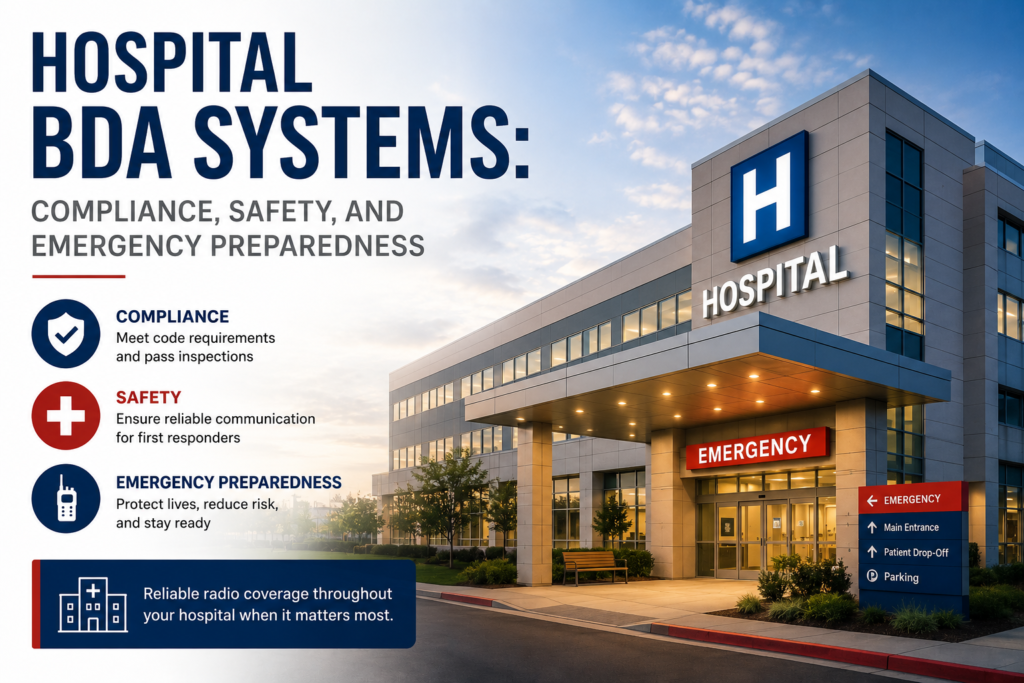
Hospital BDA Systems: Compliance, Safety, and Emergency Preparedness
Hospitals are among the most critical facilities in any community. During emergencies, first responders rely on clear and uninterrupted radio communication to coordinate response efforts, direct personnel, and protect patients, staff, and visitors.
Unfortunately, many modern healthcare facilities present significant challenges for public safety radio coverage. Large building footprints, reinforced construction materials, underground areas, and complex layouts can all weaken or block radio signals.
This is where BDA (Bi-Directional Amplifier) systems play an important role.
A properly designed BDA system helps ensure that firefighters, police officers, and emergency medical personnel can maintain reliable communication throughout a hospital, even in areas where radio coverage would otherwise be limited.
Why Reliable Communication Matters in Hospitals
Few facilities have higher communication demands than hospitals.
Unlike traditional office buildings, hospitals operate 24 hours a day and must remain functional during emergencies, severe weather events, security incidents, and large-scale medical emergencies.
When first responders enter a healthcare facility, reliable radio communication is essential for:
- Coordinating emergency response efforts
- Communicating with incident command personnel
- Navigating large and complex facilities
- Managing evacuations
- Responding to fire alarms
- Supporting mass casualty incidents
Any interruption in communication can impact response times and create unnecessary risks during critical situations.
Why Hospitals Present Unique Coverage Challenges
Hospitals are often among the most difficult buildings to provide reliable radio coverage.
Several factors contribute to signal loss inside healthcare facilities.
Large Building Footprints
Many hospitals span multiple buildings, wings, and departments connected by corridors and tunnels.
As radio signals travel deeper into the facility, signal strength naturally decreases.
Reinforced Construction
Hospitals frequently use:
- Reinforced concrete
- Structural steel
- Radiation shielding
- Energy-efficient glass
While these materials improve safety and efficiency, they can significantly weaken radio signals.
Multiple Floors and Underground Areas
Coverage challenges often occur in:
- Parking garages
- Utility tunnels
- Mechanical rooms
- Storage areas
- Basements
- Stairwells
These locations are often critical during emergency response operations.
What Is a BDA System?
A BDA (Bi-Directional Amplifier) system is designed to improve public safety radio coverage inside buildings.
The system captures existing radio signals from a nearby public safety network, amplifies those signals, and distributes them throughout the facility.
A typical BDA system includes:
- A rooftop donor antenna
- A bi-directional amplifier
- Indoor antennas
- Coaxial distribution cabling
- Backup battery systems
- Monitoring and alarm equipment
Together, these components help ensure reliable radio communication throughout the building.
Common Areas Where Hospitals Experience Signal Loss
Hospital administrators are often surprised to learn that radio coverage issues can exist even in relatively new facilities.
Some of the most common problem areas include:
Stairwells
Concrete stairwells frequently create communication dead zones.
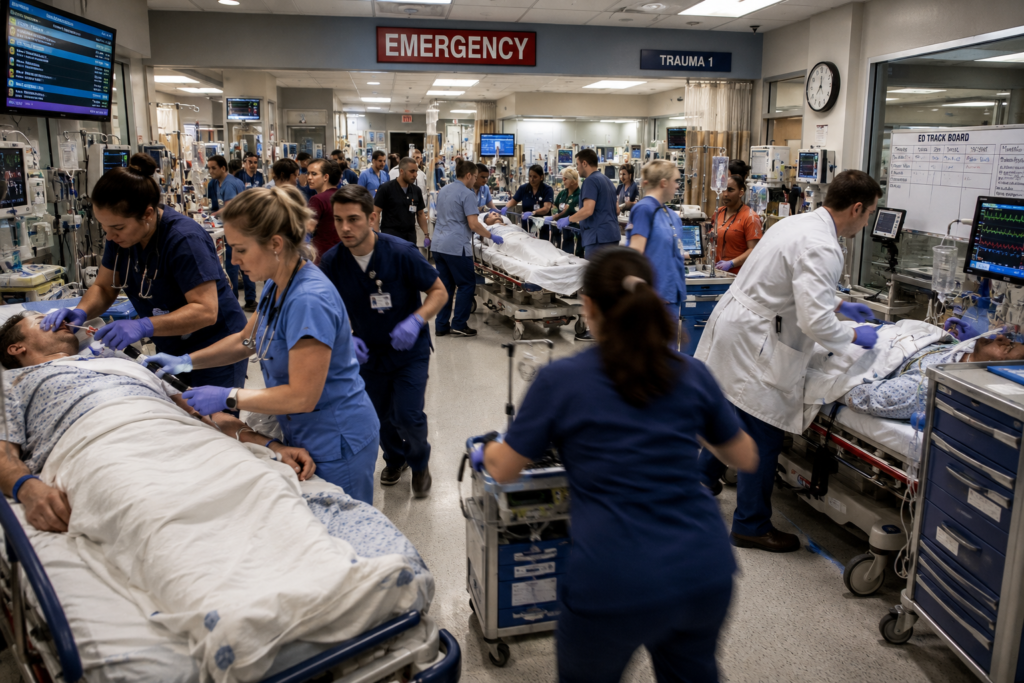
Emergency Departments
High equipment density and complex layouts can impact signal performance.
Mechanical and Utility Rooms
Critical infrastructure areas often receive poor coverage without proper system design.
Parking Garages
Underground parking structures are among the most common locations for weak radio signals.
Interior Patient Wings
Signals often weaken as they move deeper into large hospital complexes.
Without proper testing, these coverage gaps may go unnoticed until an emergency occurs.
Compliance Considerations for Healthcare Facilities
Many jurisdictions require hospital BDA systems to provide adequate radio coverage for first responders.
Coverage requirements are often evaluated during:
- New construction projects
- Facility expansions
- Renovations
- Occupancy approvals
- Periodic inspections
If signal strength does not meet required thresholds, a BDA system may be necessary to achieve compliance.
Working with experienced professionals during the planning and testing process helps identify potential issues before they become costly problems.
New Hospital Construction vs Existing Facilities
The approach to BDA implementation often depends on whether the facility is new construction or an existing building.
New Healthcare Facilities
Planning for radio coverage during the design phase offers several advantages:
- Lower installation costs
- Easier cabling pathways
- Better system integration
- Fewer construction delays
Early planning can significantly reduce future compliance challenges.
Existing Hospitals
Many healthcare facilities were constructed before current public safety communication requirements became common.
Existing buildings may require:
- Coverage testing
- System upgrades
- Additional antennas
- Full BDA installations
Retrofitting an existing hospital is often more complex, making proper planning especially important.
Annual Testing and Ongoing Maintenance
Installing a BDA system is only one part of maintaining reliable emergency communications.
Healthcare facilities should also ensure systems are regularly inspected and tested.
Routine evaluations help verify:
- Signal strength performance
- Backup battery functionality
- Alarm system operation
- Equipment health
- Overall system reliability
Regular inspections help identify issues before they impact emergency response capabilities.
This is particularly important for hospitals, where uninterrupted communication is critical.
Risks of Poor Radio Coverage in Hospitals
Poor radio coverage can create several operational and safety concerns.
Potential consequences include:
- Delayed emergency response
- Communication failures during critical incidents
- Difficulty coordinating personnel
- Increased safety risks
- Inspection deficiencies
- Costly corrective actions
For healthcare facilities, reliable communication is not simply a compliance issue. It is an essential component of emergency preparedness and patient safety.
Why Professional Design Matters
Hospital environments require specialized planning and engineering.
Every healthcare facility presents unique challenges based on:
- Building layout
- Construction materials
- Existing signal conditions
- Operational requirements
A professionally designed BDA system helps ensure:
- Reliable coverage throughout the facility
- Compliance with applicable requirements
- Reduced risk of interference
- Long-term system performance
Proper testing, design, installation, and maintenance all play a critical role in achieving successful results.
Preparing for Future Growth
Healthcare facilities frequently expand and evolve over time.
New patient towers, additional wings, parking structures, and campus expansions can all impact radio coverage.
Planning with future growth in mind allows hospitals to maintain reliable communication capabilities while minimizing future upgrade costs.
Scalable system designs can help support long-term operational goals and changing facility needs.
Final Thoughts
Hospitals face unique challenges when it comes to maintaining reliable emergency communications.
Large building footprints, complex layouts, and signal-blocking construction materials can create significant coverage gaps that impact first responder communication.
A properly designed BDA system helps healthcare facilities improve radio coverage, support emergency preparedness efforts, and maintain a safer environment for patients, staff, and visitors.
As hospitals continue to grow and modernize, reliable communication remains a critical component of both compliance and operational readiness.

Have a Hospital Project to Discuss?
Whether you're planning a new healthcare facility, expanding an existing campus, or evaluating public safety radio coverage, our team can help.
We provide BDA system design, installation, testing, and inspection services to help healthcare facilities improve emergency communications and support long-term compliance goals.
Schedule a free consultation to discuss your project and next steps.